Urgent action needed to stop weed spread in the Flinders River
Published on 15 July 2026
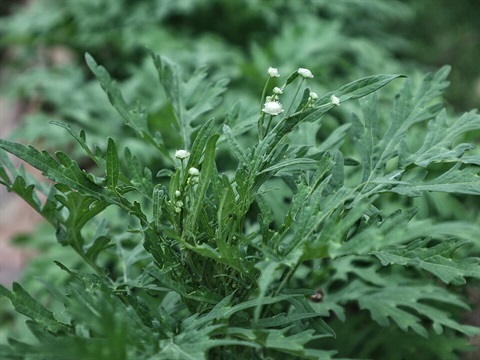
Flinders Shire Council is calling on the Queensland Government to take immediate action to clean up state-managed waterways and stop the spread of parthenium weed through the Flinders River catchment.
Parthenium (Parthenium hysterophorus) is a category 3 restricted invasive plant under the Biosecurity Act 2014 and one of Queensland’s most damaging weeds, reducing pasture productivity, contaminating hay, and affecting livestock and human health.
It spreads rapidly through floodwaters, contaminated soil, machinery, livestock, vehicles and roadside movement, and, once established, is extremely difficult and expensive to control.
Flinders Mayor Kate Peddle said the growing spread of parthenium in the Flinders River was a serious concern for graziers, local government and regional communities, with fears the invasive weed would continue to spread downstream unless stronger action was taken.
“Parthenium has run rampant after the recent wet season and councils, landholders and graziers are being left to carry the cost of infestations as it spreads to council- and privately-owned land,” Mayor Peddle said.
“As a state-controlled waterway, the Flinders River is the responsibility of the Queensland Government, which has failed to properly manage the invasive weed.
“This pushes the burden downstream onto councils, graziers and communities – at significant cost.”
In Queensland, the State Government is responsible for state-controlled waterways and for leading biosecurity responses, while local governments and landholders manage weeds on their own land.
Flinders Shire Council has committed to working with neighbouring councils to tackle current and potential pests, such as parthenium, with the North West Queensland Regional Biosecurity Plan 2022-2027 establishing a catchment-wide approach to their management.
Mayor Peddle said the issue was bigger than any one property or council boundary.
“Everyone has a role to play in weed control, but it is incredibly frustrating when the Queensland Government fails to look after its own responsibilities,” she said.
“Parthenium is not a minor issue. It is a serious weed that spreads quickly, damages productivity and becomes more expensive to manage every year it is left unchecked.
“The Flinders River is a major pathway for spread, and if we do not act now, we will keep seeing this weed move further into country that should be protected.”
Councillor Shane McCarthy surveys the Flinders River, where the spread of parthenium weed is of serious concern.
The Flinders region has long championed irrigated agricultural development, with the river system seen as a key part of the region’s future productivity and growth.
However, Mayor Peddle warned that future could be placed under threat if parthenium continued to spread unchecked through the catchment.
“Local governments are already under enormous pressure trying to manage weeds on roadsides, drainage lines and community land, and when infestations spread from state-managed waterways, ratepayers end up footing the bill,” she said.
“This is not just a weed problem – it is a productivity problem, a cost-of-living problem and a regional development problem.
“If we want to grow agriculture, support irrigated development and build stronger regional economies, then we have to protect the land and waterways that make that possible.”
Flinders Shire Council is calling for a coordinated catchment-wide response, including stronger surveillance, targeted treatment, more funding for weed control and a genuine commitment to cleaning up waterways before infestations spread further.
“The Flinders River must be protected now to safeguard agricultural productivity, community wellbeing and the long-term future of the region,” Mayor Peddle said.